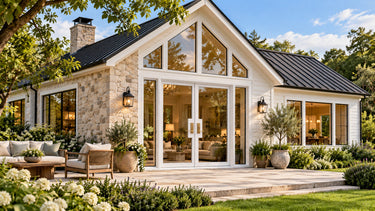
Iron doors with large glass panels bring natural light, openness, and elegance to a home. But when choosing an iron door with extensive glazing, the glass configuration deserves just as much attention as the door's design.
One option worth considering is Low-E glass. It helps improve the thermal performance of insulated glass while maintaining the clear, elegant appearance homeowners love.

What Is Low-E Glass?
Low-E stands for low emissivity. It refers to a thin, nearly invisible coating applied to glass to help manage the transfer of radiant heat.
Depending on the coating and glass configuration, Low-E glass can help reduce unwanted heat gain during warmer months and limit heat loss during colder months.
This makes it a useful option for exterior doors with large glass areas, especially when homeowners want to enjoy natural light while paying attention to indoor comfort.
How Does Low-E Glass Work?
Standard insulated glass already provides an insulating airspace between two glass panes. Low-E adds another layer of performance through its special coating.
The coating helps reflect certain wavelengths of radiant heat while allowing visible light to pass through. This helps manage heat transfer through the glass without sacrificing the open, bright appearance of glass doors.
The actual performance depends on the Low-E coating, its placement, and the overall insulated glass configuration.
Single Low-E vs. Double Low-E
When choosing glass for an iron door, there are different Low-E configurations to consider.
Standard Double-Pane Tempered Glass
Our standard glass option features two panes of tempered glass with an insulated cavity between them. It provides an insulating glass structure for everyday residential applications.
Single Low-E Glass
Single Low-E adds one Low-E coating to the insulated glass configuration. It is an option for homeowners looking to improve the glass's thermal performance.
Double Low-E Glass
Double Low-E uses two Low-E coatings. This configuration offers another option for projects with specific heating and cooling priorities.
The best choice depends on your local climate, the direction your door faces, sunlight exposure, and your overall project requirements.
Is Low-E Worth Considering for French Iron Entry Doors?
For French iron doors with large glass panels, Low-E glass is worth considering, especially when the doors serve as the main entrance to your home.
Large glass areas can allow more sunlight and heat to pass through, depending on the glass specifications and sun exposure. A suitable Low-E configuration can help manage solar heat gain or reduce heat loss while preserving the open, light-filled look that makes French iron doors so appealing.
If you're choosing French iron doors for your main entrance, we recommend considering Low-E glass alongside other factors, including your local climate, the direction your entryway faces, and the door's overall thermal performance.
The goal is to enjoy the beauty of expansive glass while choosing a configuration that suits your home.
Find the Right Glass for Your Iron Entry Door
At Glory Iron Doors, we offer glass options for different design preferences and project needs. If you're considering French iron doors or another glass-heavy entry door design, contact our team to explore the available configurations and determine whether Low-E glass is a suitable upgrade for your home.