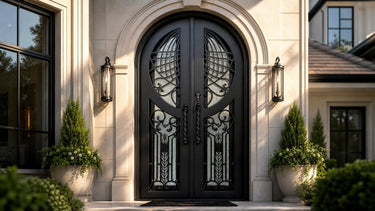
Decorative ironwork is one of the defining visual elements of a wrought iron door. From clean geometric lines to flowing scrollwork and detailed organic motifs, different ironwork designs can give a door a completely different character.
Understanding the basic types of ironwork, how decorative detail changes the appearance of a door, and how different designs relate to the size and style of an entrance can make it easier to choose the right design for your home.
1. What Is Decorative Ironwork?
Decorative ironwork refers to iron elements that are shaped into ornamental patterns and incorporated into the structure or surface of a door. These elements may include flowing scrolls, curved lines, leaves, floral motifs, geometric shapes, or combinations of different patterns.
Unlike a simpler iron French door, where clean iron framing and organized glass divisions create much of the visual character, a decorative wrought iron door uses the ironwork itself as an important part of the design. Decorative ironwork is not simply about adding more detail. The shape, arrangement, scale, and repetition of the elements can create visual rhythm, establish focal points, and add depth to the door. The pattern can also influence the architectural character of an entrance, ranging from restrained and contemporary designs to more traditional and ornamental styles.
2. Common Decorative Ironwork Designs
Decorative ironwork can take many forms. Different patterns create different visual effects, from subtle architectural detail to a highly ornamental entrance.
Scrollwork
Scrollwork uses flowing curves, loops, and circular forms to create a classic decorative appearance.
Simple scrollwork may consist of a few carefully placed curves, while more elaborate designs can include multiple scrolls arranged in symmetrical or layered compositions.
The size, direction, and spacing of the curves all influence how prominent the finished pattern appears.

Floral and Leaf Motifs
Leaves, vines, and floral-inspired elements introduce organic shapes into the ironwork.
These motifs can create a softer and more decorative character, particularly when the pattern incorporates flowing lines and natural forms.
Floral and leaf elements can also be combined with scrollwork to create more elaborate traditional designs.

Geometric Ironwork
Geometric ironwork uses structured forms such as straight lines, diamonds, arches, and repeated shapes.
Compared with traditional scrollwork, geometric patterns generally create a cleaner and more organized visual language.
They can add decorative interest while maintaining a more contemporary or transitional appearance.

Mixed Decorative Patterns
Some wrought iron doors combine several design elements, such as scrolls, curves, leaves, and geometric shapes.
Mixed patterns can create a more distinctive focal point, but combining multiple elements also requires careful attention to scale, spacing, and overall composition.
The individual details should work together as one pattern rather than competing for attention.

3. From Minimal to Ornamental: How Ironwork Changes a Door
The type of pattern is only one part of decorative ironwork design. The amount and complexity of the ironwork can also significantly change the visual character of a door.
The same basic door can appear clean and understated, moderately decorative, or highly ornamental depending on how much ironwork is incorporated into the design.
|
|
Minimal |
Modern |
Ornamental |
|
Reference pic |
|
|
|
|
Visual Character |
Clean and understated |
Structured and restrained |
Rich and expressive |
|
Ironwork Approach |
Little or no decorative ironwork |
Simple iron framing and organized divisions |
Scrollwork, organic motifs, and detailed compositions |


Minimal
A minimal design keeps decorative elements to a minimum, allowing the basic shape and structure of the door to remain the primary visual focus.
With little or no additional ornamentation, the result is clean, simple, and architectural.
Modern
A modern decorative design introduces controlled lines, restrained curves, or limited decorative elements without creating a heavily ornamental appearance.
This approach adds character while maintaining a relatively clean composition.
Ornamental
An ornamental design uses more extensive scrollwork, curves, floral motifs, or layered elements.
In this type of design, the ironwork becomes a major visual feature of the entrance rather than a secondary detail.
The difference between these styles is therefore not simply the number of decorative elements. It is how the ironwork changes the overall visual character of the door.
4. Matching Ironwork Design to the Door and Architecture
Choosing an ironwork pattern is not only a matter of personal preference. The size and configuration of the door, the scale of the entrance, and the architectural character of the home can all affect how a particular pattern looks when finished.
A detailed scrollwork composition may have more visual impact on a large double door, where the pattern has enough space to develop. A smaller single door may benefit from a simpler arrangement that keeps the decorative elements clear and proportionate.
The relationship between the pattern and the surrounding architecture is also important.
|
Ironwork Style |
Visual Character |
Often Works Well With |
|
Minimal |
Clean and understated |
Simple single-door entrances and contemporary settings |
|
Geometric |
Structured and modern |
Modern and transitional architecture |
|
Simple Scrollwork |
Decorative but restrained |
Traditional and transitional entrances |
|
Floral / Organic |
Soft and decorative |
Traditional or Mediterranean-inspired settings |
|
Ornamental Scrollwork |
Rich and formal |
Large double doors and prominent entrances |
|
Mixed Patterns |
Distinctive and expressive |
Larger custom doors with more visual space |
These are general design directions rather than strict rules. A traditional home can use a restrained pattern, and a contemporary home can incorporate decorative ironwork when the overall composition is carefully considered.
The goal is to create a natural visual relationship between the ironwork, the door, and the entrance as a whole.
5. How to Choose Your Decorative Ironwork
Once the basic design options are understood, choosing an ironwork style becomes a matter of matching the pattern and level of detail to the character of the entrance.
Start with the Overall Character
First consider how you want the entrance to feel:
Clean and understated
Modern and structured
Traditional and decorative
Rich and ornamental
This helps establish the appropriate level of decorative detail before selecting a specific pattern.
Choose the Pattern
Next, consider which type of ironwork best expresses that character.
You may prefer:
Geometric lines for a structured appearance
Simple curves for restrained decoration
Scrollwork for a classic ornamental character
Floral and leaf motifs for a more organic appearance
Mixed patterns for a more elaborate custom design
Consider the Door Size
The dimensions and configuration of the door should be considered together with the pattern.
A smaller single door may benefit from restrained decoration that keeps the composition open and clear. A larger double door or prominent entrance can provide more space for detailed ironwork to develop.
Consider the Architectural Setting
The ironwork should relate naturally to the architectural language of the home.
This does not mean the door has to exactly match every surrounding detail. Instead, the pattern and level of ornamentation should feel intentional within the entrance.
Keep the Composition Balanced
More decorative detail does not necessarily mean a more successful design.
The goal is to choose a pattern with enough presence to give the door character while maintaining clear proportions, appropriate spacing, and a balanced overall composition.
Decorative ironwork gives a wrought iron door much of its visual character. From clean geometric lines to flowing scrollwork and detailed organic patterns, different approaches can create very different impressions.
The right choice is not necessarily the most elaborate pattern. It is the design that fits the style, scale, and character of the entrance.
For homeowners looking for a more personalized design, Glory Iron Doors offers custom wrought iron doors with a range of decorative ironwork styles, from clean and understated designs to more elaborate scrollwork and ornamental patterns. Decorative elements can be developed around the door's size, configuration, and overall design to create a more balanced finished entrance.
Whether the goal is a minimal modern appearance or a more traditional ornamental statement, well-designed ironwork should enhance the door rather than overwhelm it. A thoughtfully designed custom iron door can bring that balance together while giving the entrance a character that feels distinctly its own.